


Seasonality on Amazon: Why Contextual Optimization Creates Winners
Christian Umbach
######

For brands selling on Amazon, seasonality isn’t just a nice-to-have consideration — it’s one of the strongest levers for organic growth. Search behavior shifts dramatically throughout the year, and listings that adapt quickly capture demand that others miss.
At Autopilot, we’ve built a fully automated seasonality engine that ensures your ASINs don’t just keep up, but stay ahead.
Why Seasonality Matters for Organic Sales
Search volume on Amazon fluctuates significantly by season. Take _paper plates_ as an example:
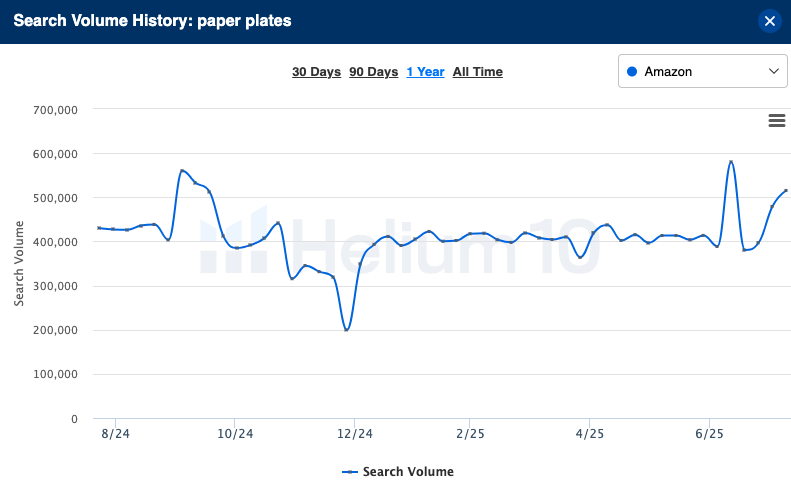
H10 Cerebro Analysis
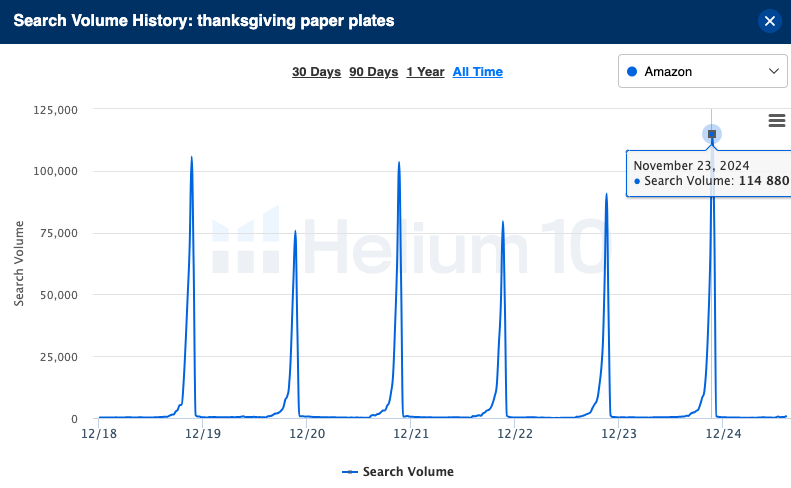
H10 Cerebro Analysis

H10 Cerebro Analysis
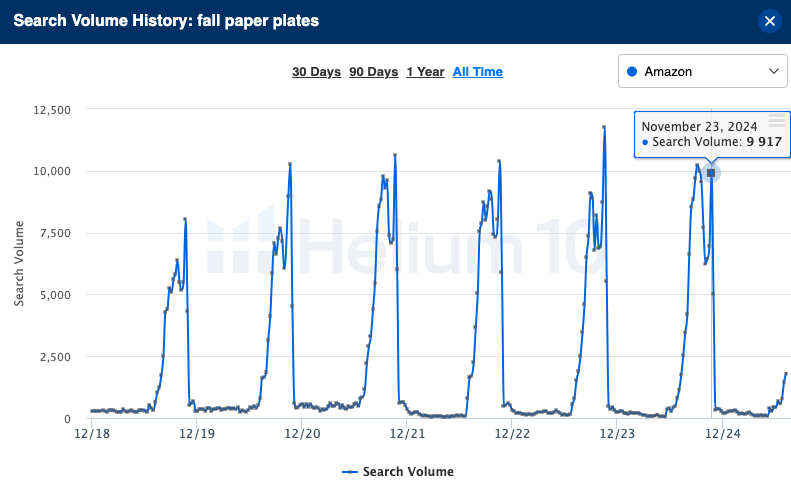
H10 Cerebro Analysis
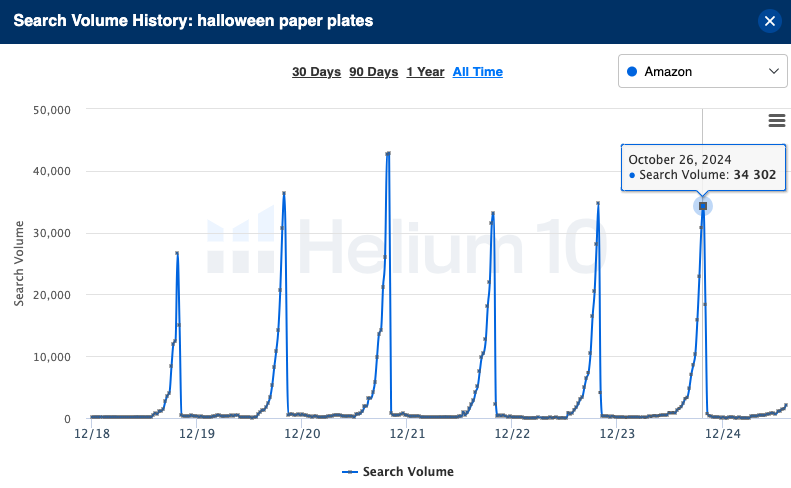
H10 Cerebro Analysis
Without seasonal optimization, brands risk:
Done right, seasonal optimization delivers:
When to Prepare: The Importance of Lead Time
Seasonal windows on Amazon typically run about eight weeks, with some shorter transitions (e.g., Thanksgiving into Christmas). For fall selling, the optimal lead time is mid-August through early September — when early searches begin to shift.
Most sellers react too late. Autopilot’s predictive approach gives brands a head start, optimizing listings _before_ the demand curve spikes, not after.

The Pitfalls of Seasonal Optimization
Many brands hesitate to optimize for seasonality because it’s complex to manage. Common pitfalls include:
Autopilot removes this burden with automation and compliance guardrails, ensuring seasonal updates never compromise your core brand positioning.
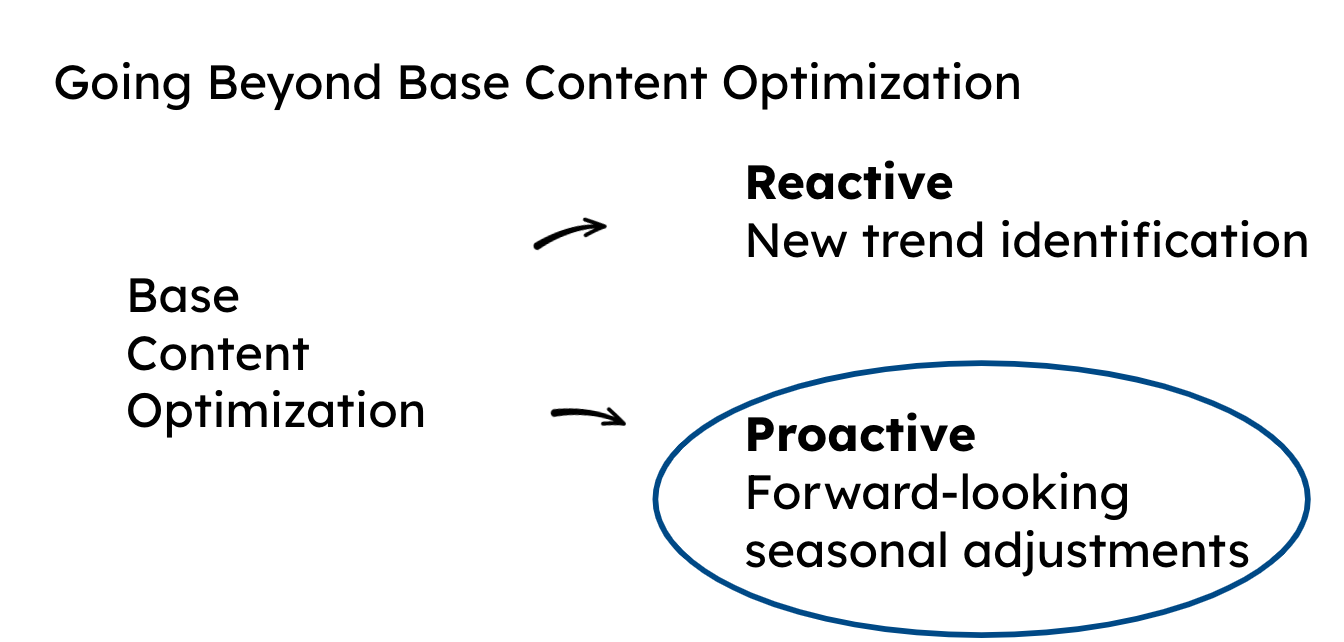
Basic goods? No basic seasonal pattern!
Most products benefit from seasonal updates - even though they appear to be 'basic goods' - their demand patterns don't follow a consistent discovery process.
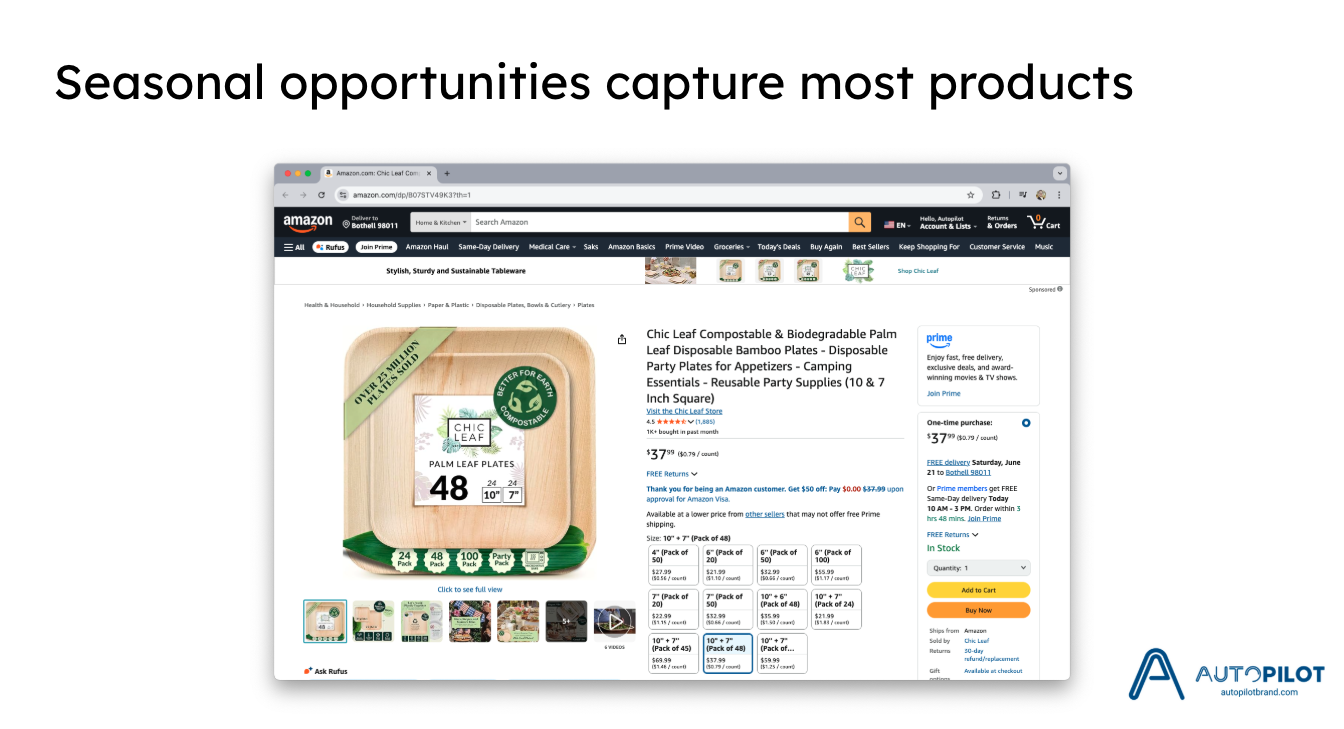
Product Example of a Product Highly Benefitting from Seasonal Updates
How Seasonality Connects with Ad Performance
Seasonality isn’t just about organic SEO. Ads play a key role in uncovering which keywords convert at different times of year.
By analyzing sponsored product campaign data alongside organic purchases, Autopilot surfaces the exact terms driving sales. The result:
What Makes Autopilot Different
Most sellers approach seasonality one of two ways:
1. They don’t optimize at all, missing seasonal lifts entirely.
2. They do manual one-off updates, which are too slow and labor-intensive.
Autopilot offers a fully done-for-you experience:
The result: effortless, automated seasonal optimization that ensures every ASIN wins its season.
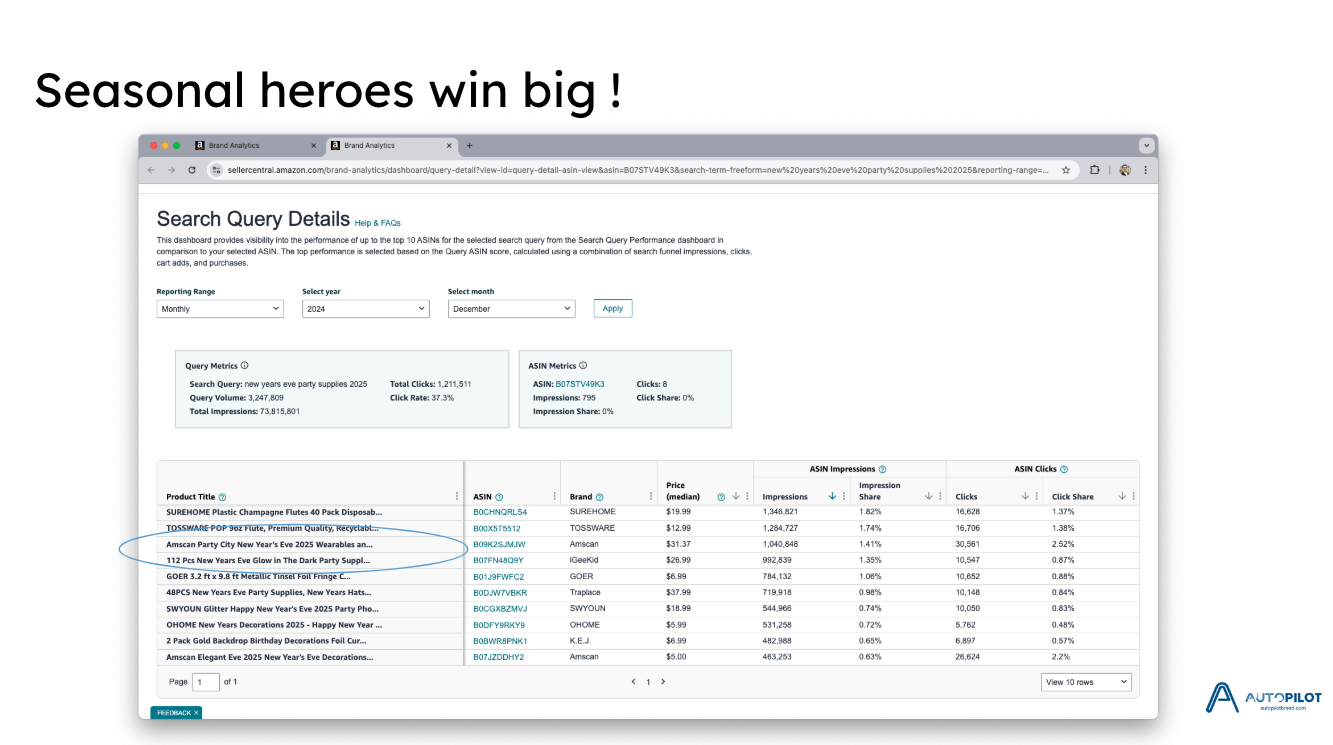
Grounding updates in Search Query Performance Data
Along with details from the Sponsored Product campaigns, Amazon's Search Query Performance Data reveals which particular terms and seasonal opportunities exist on an ASIN level.
Going back time reveals what drove success on a particular ASIN - and on competitors. These insights are core to Autopilot's optimizations.

Search Query Performance Report Examples for Paper Plates
Seasonality, Rufus, and the Future of Contextual Optimization
Amazon’s Rufus and generative shopping experiences are changing the game. AI-driven search engines surface recommendations based on contextual relevance, not just keyword matching.
That means being seasonally relevant isn’t optional — it’s a requirement. Listings that speak to seasonal context are more likely to be recommended by Rufus and similar shopping assistants.
Seasonal content is no longer a tactical edge. It’s a strategic pillar of contextual optimization in the era of AI-assisted shopping.
Win Every Season with Autopilot
The next season is always just around the corner. Instead of scrambling to update keywords and listings, Autopilot ensures your catalog is continuously aligned with shifting customer demand — one season at a time.
👉 Ready to see how Autopilot can optimize your Amazon sales this season? Connect with us today.

More
Seasonality on Amazon: Why Contextual Optimization Creates Winners
Leveraging Amazon's Search Query Performance Report for Enhanced Listings and Boosted Organic Sales
How Autopilot Revolutionizes New Product Launches on Amazon
64% Organic Page View Lift on Long Tail Listings on Autopilot - A Starlight Success Story
Unlocking Your Amazon Store’s Full Potential: Autopilot’s Revolutionary Autopilot-Mode
Autotune Your Listings to Fuel Ad Performance
Introducing AI for Product Listing Optimization
10 Principles for Building a More Trustworthy AI for Amazon Sellers
Our founding story – From autopilot in aviation to Autopilot for digital-first brand operations
From Data Analytics to the Power of Workflow Automation in eCommerce: Autopilot's Approach